











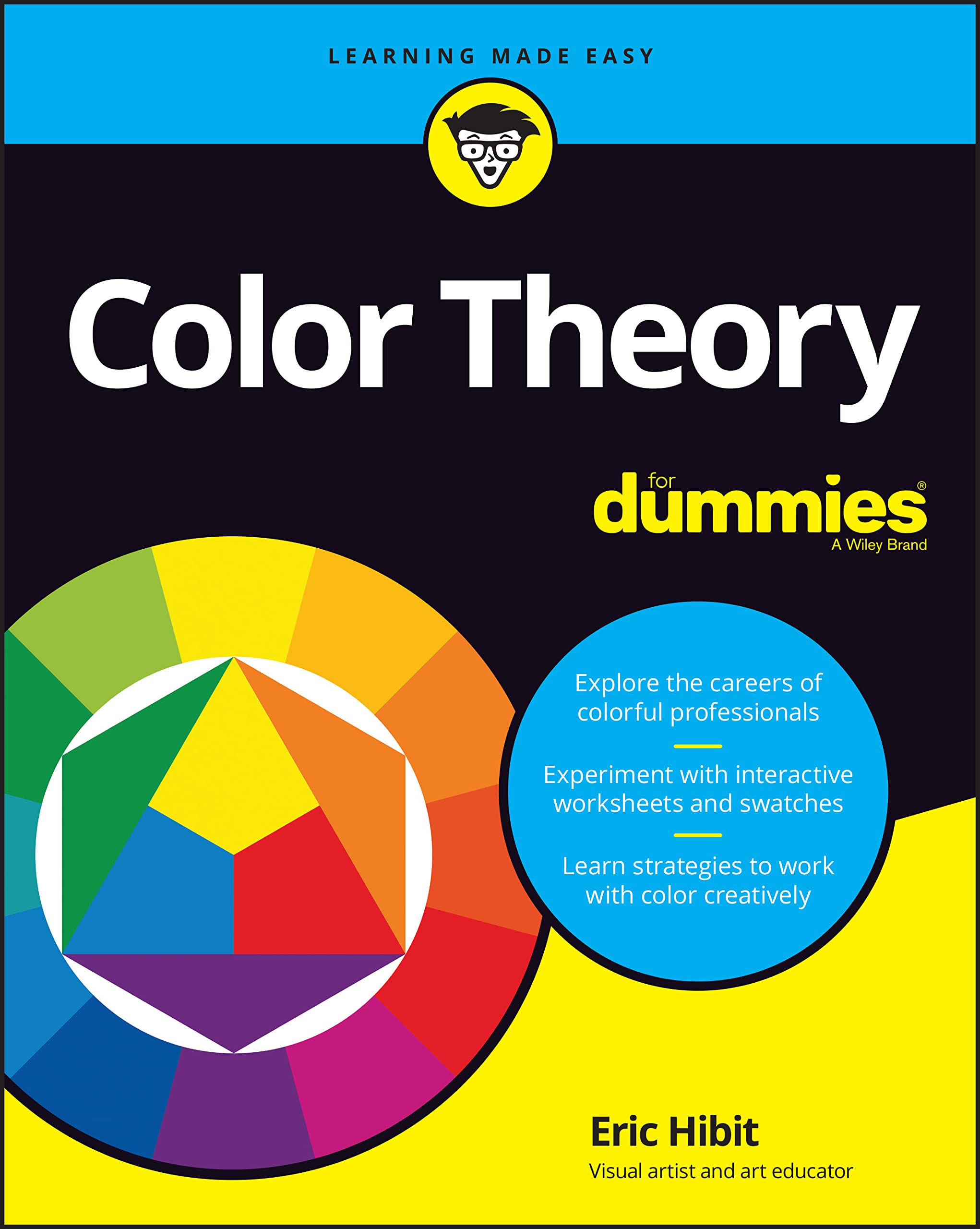
Color Theory For Dummies
Inhouse product






What is color theory? “Color theory” is a broad term that simply means ideas about color. Artists throughout history have gathered information about their understanding of color. For example, Josef Albers based his color theory on the idea that color is relative: color changes in context of other colors. Sanzo Wada explored how color groupings work together to create a mood and seasonal associations. Mary Gartside used blots of watercolor to show how colors transition from light to dark, or from red to green. Albers, Wada and Gartside all wrote books about their way of seeing and working with color. The beauty of exploring their color theories is that we can learn about how they worked with color and glean ideas for our own work or get inspired to create our own color theories. Color Theory for Dummies includes descriptions of their work with color, and the color theories of others as well! How does color theory apply to everyday life? One of my goals for Color Theory for Dummies is to bring color to the forefront for the reader: to help the reader see color better, think about color more deeply, and question assumptions about color. For example, I encourage readers to slow down when they look at color, giving time for the eyes to adjust. This is an important tip, because our world is fast-paced and moves quicker than our eyes can see. As far as assumptions, there are many cultural assumptions surrounding color that are worth exploring. For example, why are some colors “off-limits” for certain genders or ages? To understand the true expressive potential of color - and your innate desires for color - cultural assumptions must be questioned. Why should I buy this book? Color perception is a basic part of human experience. People without sight can experience color through language, touch, or sound associations. For those of us with color vision deficiencies (also known as color blindness) color perception remains a complex and rich experience. Factors like age, genetics, and changing light conditions play a part in how color is perceived. Even though we all see color differently , color remains an experience we all share. Knowing about color is a way to enjoy life, just like enjoying the flavors of different foods or the sounds of different music. Color Theory for Dummies makes basic concepts about color accessible, including the history of color and its use from cave paintings to contemporary art; the science of color perception (physics and biology), color theories of different artists throughout history, color systems, working with color in different media such as painting, drawing, collage, and digital. So, you can learn about how color at work, Color Theory for Dummies includes interviews with 10 different professionals about their work with color, including leading interior designer Jamie Drake , head of the Pantone Color Institute and “international color guru” Leatrice Eiseman , food aficionado Fanny Singer, and motion picture colorist Paul Bronkar ! What about color in your paintings? Color is an essential element in my paintings. I use color to explore mood, time of day, and atmosphere. For me, color is symbolic and laden with both cultural and personal meaning. You can see more of my work at erichibit(dot)com and follow my IG at erichibit About the Author Eric Hibit is a visual artist based in New York City. He attended the Corcoran College of Art + Design (BFA) and Yale University School of Art (MFA). In New York, he has exhibited at Morgan Lehman Gallery, Dinner Gallery, Deanna Evans Projects, One River School of Art + Design, Tiger Strikes Asteroid, Underdonk Gallery, Ortega y Gasset Projects, Zurcher Studio, C24 Gallery, Anna Kustera Gallery, and Max Protetch Gallery. He has exhibited at Weatherspoon Art Museum, Geoffrey Young Gallery, The Cape Cod Museum of Art, Satellite Contemporary, The University of Vermont, Bedford Gallery and in Sweden, France, and Norway. His work has been covered by the Washington Post, Ne
Related products













Contact Info
- Address: 1900 W Littleton Blvd, Littleton, CO 80120, United States